Search “Willie Brown” and you’ll get a blues guitarist, a Hall of Fame cornerback, several Scottish footballers, and a California politician — all at once. It’s one of those names that belongs to too many notable people for search engines to sort cleanly.
But if you’ve heard the name in the context of California politics, San Francisco, Gavin Newsom, or Kamala Harris, you’re almost certainly looking for one specific person: Willie Lewis Brown Jr., the former mayor of San Francisco and longest-serving speaker of the California State Assembly.
This guide covers who he is, how he built one of the most durable political careers in modern American politics, why he’s still referenced constantly decades after leaving office, and how to tell him apart from the other well-known Willie Browns.
Who Is Willie Brown?
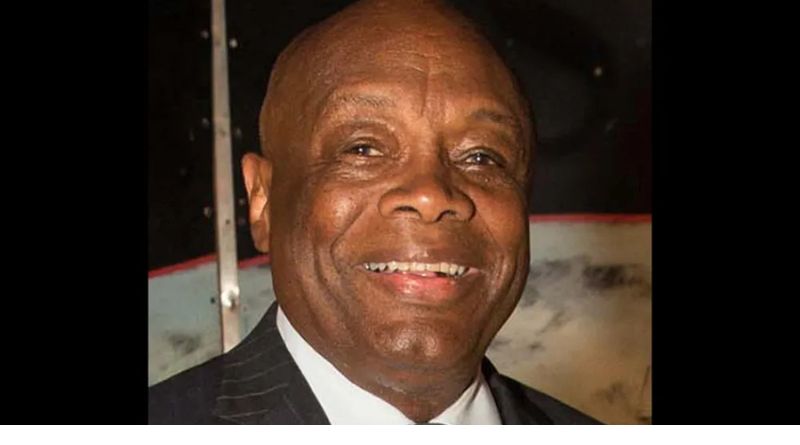
Willie Lewis Brown Jr. is an American politician who served as mayor of San Francisco from 1996 to 2004 and as speaker of the California State Assembly from 1980 to 1995. He was the first African American to hold either position, and his 15-year tenure as speaker remains the longest in that body’s history.
<cite index=”3-1″>Brown was born on March 20, 1934, in Mineola, Texas, into poverty in a rural part of the state, and moved to San Francisco after graduating from high school.</cite> <cite index=”3-1″>He earned a bachelor’s degree in liberal studies from San Francisco State College in 1955 and a law degree from the University of California Hastings College of the Law in 1958, then established a private legal practice and became active in politics.</cite>
He is still alive and publicly active. <cite index=”10-1″>In February 2026, he appeared at the Commonwealth Club in San Francisco in conversation with KQED political reporter Scott Shafer, discussing the city’s economic recovery, homelessness, affordability, and the California governor’s race.</cite>
How Willie Brown Built His Political Career
Brown’s rise is worth understanding in stages, because it illustrates something specific about how legislative power actually works — not through public popularity alone, but through mastery of internal process.
<cite index=”3-1″>He won election to the California State Assembly in 1964, and after being appointed to chair the Legislative Representation Committee, used that post to strengthen his position within the legislature.</cite> <cite index=”3-1″>He became Democratic Party whip in 1969, made an unsuccessful run for speaker in 1974, and finally won the speakership in 1980 — notably by assembling a coalition of 28 Republicans and 23 Democrats.</cite>
That last detail is the one political observers cite most often. Winning a Democratic leadership post with more Republican votes than Democratic ones is an unusual accomplishment, and it established his reputation as a negotiator who could build coalitions across party lines rather than relying purely on partisan loyalty.
The End of the Speakership
His long tenure eventually became a political target in itself. <cite index=”3-1″>Brown was a prime focus of the successful 1990 California ballot effort to impose term limits on state legislators, restricting them to three terms.</cite> <cite index=”3-1″>Forced to leave the Assembly as a result, he ran for mayor of San Francisco in 1995, won, and was reelected in 1999.</cite>
It’s a genuinely unusual career arc: a term-limit measure designed largely in response to one politician’s dominance simply redirected him into a different office rather than ending his career.
Willie Brown as Mayor of San Francisco
Brown served two terms as mayor, from 1996 to 2004, overseeing the city during the dot-com boom and its subsequent bust — a period of enormous economic volatility for San Francisco.
His mayoralty is generally remembered as consequential but contested. Supporters credit him with major infrastructure investment, downtown development, and a governing style that got things built. Critics have pointed to unmet goals around homelessness and affordability, and to a patronage-heavy approach to City Hall appointments. Both assessments appear regularly in retrospectives on his tenure, and it’s fair to say his record remains genuinely debated rather than settled.
This balance matters if you’re researching him seriously: sources tend to fall into strongly admiring or strongly critical camps, so reading across several is more useful than relying on any single profile.
Why Willie Brown Still Comes Up in National Politics
Decades after leaving office, Brown’s name still surfaces in national coverage, largely because of who he mentored.
<cite index=”13-1″>He mentored Gavin Newsom, whom he initially viewed more as a movie star when Newsom volunteered on his campaign as a young wine merchant; Brown offered him the only remaining position available in his administration — a seat on the parking and traffic commission — and was impressed that Newsom took it without complaint and got to work.</cite> <cite index=”13-1″>He also mentored Kamala Harris.</cite>
That mentorship pipeline is why Brown is sometimes described as a kingmaker in California Democratic politics. Two of the state’s most nationally prominent political figures passed through his orbit early in their careers, and he has remained a frequently quoted commentator on both.
The Other Willie Browns: Clearing Up the Confusion
This is worth addressing directly, because the name confusion has produced at least one genuinely notable public mix-up.
- Willie Brown (American football, 1940–2019) — Hall of Fame cornerback for the Oakland Raiders, famous for a pick-six in Super Bowl XI.
- Willie Brown (musician, 1900–1952) — American Delta blues guitarist and singer, closely associated with Son House and Charley Patton.
- Willie Brown (American football, 1942–2018) — USC star and later a Tampa Bay Buccaneers coach.
- Multiple Scottish footballers, a 19th-century Scottish golfer, and an Australian rugby league player.
The mix-up worth knowing about: <cite index=”14-1″>in June 2020, the BET Awards mistakenly included the very-much-alive former San Francisco mayor in its “In Memoriam” tribute, when producers had intended to honor the late NFL Hall of Fame cornerback of the same name.</cite> <cite index=”12-1″>Brown responded with characteristic humor, joking about the interception in the 1977 Super Bowl and saying it was fine if he had to take credit for the other man’s death.</cite>
If you’re researching him for a school assignment, article, or reference project, double-check which Willie Brown a given source is describing before citing it.
FAQ: Common Questions About Willie Brown
Is Willie Brown still alive? Yes. Born in March 1934, he is in his early nineties and remains publicly active, appearing at events and commenting on California and national politics as recently as 2026.
What is Willie Brown best known for? He’s best known for being the first African American speaker of the California State Assembly, serving in that role for a record 15 years, and for being the first African American mayor of San Francisco, serving from 1996 to 2004.
Did Willie Brown mentor Gavin Newsom and Kamala Harris? Yes. Both worked within his political orbit early in their careers, and he is frequently described as an influential mentor to each, which is a major reason his name still appears in national political coverage.
Has Willie Brown appeared in movies? Yes. <cite index=”3-1″>He had small roles in several films, including The Godfather Part III, George of the Jungle, Just One Night, and The Princess Diaries.</cite> <cite index=”4-1″>In the case of The Godfather Part III, Coppola reportedly cast Brown himself after an actor failed to understand the instruction to model the character on him.</cite>
Did Willie Brown write a book? Yes. <cite index=”3-1″>He published an autobiography, Basic Brown: My Life and Our Times, in 2008.</cite> He has also written a long-running column for the San Francisco Chronicle.
Key Takeaways
Willie Brown’s career is a study in legislative mastery and political longevity: a rise from rural Texas poverty to two of the most powerful offices in California, a speakership so dominant it helped trigger statewide term limits, and a post-office role as mentor and commentator that has kept him relevant well into his nineties. His record as mayor remains genuinely debated, which is worth keeping in mind when reading any single account of it.
If you’re researching California political history more broadly, his career is a useful entry point — following the term-limits fight of 1990 or the careers of the officials he mentored will give you a much fuller picture of how modern California politics took its current shape.