If you’ve ever used “civil rights” and “civil liberties” as if they mean the same thing, you’re in good company — most people do, including plenty of news anchors and textbooks that should probably know better. But the two terms describe genuinely different legal concepts, and mixing them up can lead to real confusion about which law actually protects you in a given situation.
This guide breaks down exactly where the line falls, walks through concrete examples of each, and explains why understanding the distinction actually matters — whether you’re studying for a civics exam, trying to understand a news story, or just curious about how American law is structured.
Civil Rights vs. Civil Liberties: The Core Difference
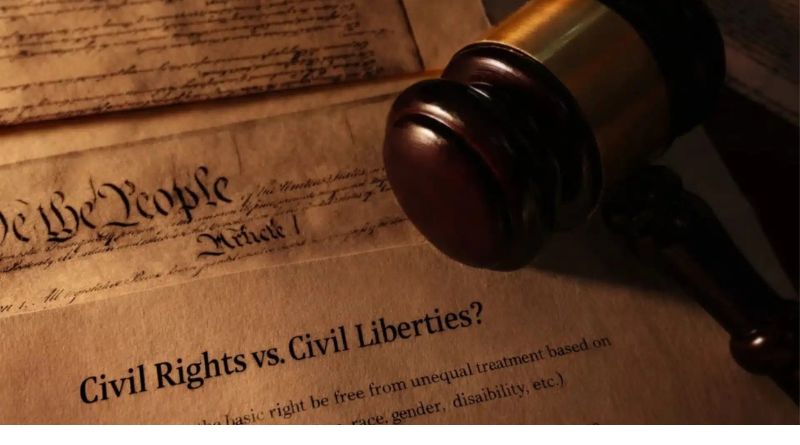
Civil liberties are fundamental freedoms that protect individuals from government interference, while civil rights are protections that guarantee equal treatment under the law and protect people from discrimination. In short: liberties limit what government can do to you; rights ensure government treats you the same as everyone else.
That one-sentence version covers the essential distinction, but the details of how each category actually functions in practice are where it gets genuinely useful to understand.
What Are Civil Liberties?
Civil liberties are basic freedoms the government is constitutionally barred from taking away or restricting, regardless of who you are. They exist to draw a hard line around individual freedom that the state cannot cross.
Most civil liberties in the U.S. trace directly back to the Bill of Rights, the first ten amendments to the Constitution. Common examples include:
- Freedom of speech, religion, press, and assembly (First Amendment)
- Protection against unreasonable search and seizure (Fourth Amendment)
- The right to remain silent and protection against self-incrimination (Fifth Amendment)
- The right to a fair and speedy trial (Sixth Amendment)
- Protection against cruel and unusual punishment (Eighth Amendment)
The key feature of civil liberties is that they apply to everyone automatically, by default, without needing a separate law to activate them for a specific group. You don’t need special legislation to have the right to free speech — it’s a constitutional restraint on government power that exists whether or not any law specifically mentions you.
What Are Civil Rights?
Civil rights are legal guarantees of equal treatment, primarily focused on protecting people from discrimination based on characteristics such as race, color, religion, sex, national origin, disability, or age. Unlike civil liberties, civil rights typically require specific legislation to define and enforce them.
Major examples of civil rights protections include:
- The right to vote regardless of race (15th Amendment, later strengthened by the Voting Rights Act of 1965)
- Protection from employment discrimination (Title VII of the Civil Rights Act of 1964)
- Equal access to public accommodations, such as restaurants and hotels (Title II of the Civil Rights Act of 1964)
- Equal protection under the law (14th Amendment)
- Protection from housing discrimination (Fair Housing Act of 1968)
Civil rights emerged largely as a response to situations where certain groups were legally or systematically denied the same treatment as others — often despite technically having the same civil liberties on paper. The Civil Rights Movement of the 1950s and ’60s was fundamentally a fight for civil rights, not civil liberties, because the core issue wasn’t that Black Americans lacked free speech or due process protections in theory — it was that they were being denied equal treatment in practice.
A Simple Way to Tell Them Apart
Here’s a test that clears up most confusion: ask whether the issue is about government overreach or unequal treatment.
- If the government is doing something to you that it isn’t allowed to do — searching your home without a warrant, punishing you for a political opinion, denying you a fair trial — that’s a civil liberties issue.
- If you’re being treated differently than someone else because of who you are — denied a job, refused service, excluded from a school — that’s a civil rights issue.
A useful mental shortcut: civil liberties are about freedom from interference. Civil rights are about freedom to participate equally.
Side-by-Side Comparison
| Civil Liberties | Civil Rights | |
|---|---|---|
| Protects against | Government interference | Discrimination and unequal treatment |
| Applies to | Everyone, automatically | Groups historically denied equal treatment |
| Legal foundation | Bill of Rights, constitutional amendments | Civil Rights Act of 1964, Voting Rights Act, Fair Housing Act |
| Core question | “What can’t the government do to me?” | “Am I being treated the same as everyone else?” |
| Requires specific legislation | Generally no — built into the Constitution | Often yes — enforced through statutes like Title VII |
Where the Two Concepts Overlap
The distinction isn’t always perfectly clean, and that’s part of why the terms get confused so often. Some issues genuinely touch both categories at once.
Take voting, for example. The right to vote itself is often discussed as a civil liberty — a fundamental freedom of political participation. But laws targeting specific groups’ ability to vote, such as poll taxes or literacy tests historically used to disenfranchise Black voters, are civil rights issues, because the harm being addressed is unequal treatment, not the existence of the right itself.
Similarly, due process protections are civil liberties by nature, but when due process is applied unevenly based on race or other protected characteristics, that unequal application becomes a civil rights concern layered on top of a civil liberties framework.
This overlap is exactly why legal scholars and civics textbooks sometimes disagree on which category a specific issue technically belongs to — the categories describe different mechanisms of harm, but real situations don’t always fall neatly into just one.
Why This Distinction Actually Matters
Beyond passing a civics quiz, understanding the difference has practical value.
It clarifies which law applies. If you’re researching whether a specific action violated your rights, knowing whether you’re dealing with a civil liberties issue (constitutional restraint on government) or a civil rights issue (statutory protection against discrimination) points you toward the correct legal framework and the correct agency or court to address it.
It explains historical civil rights movements more accurately. Movements like the Civil Rights Movement weren’t fighting for freedoms that didn’t exist on paper — they were fighting for those existing freedoms to be applied equally. Understanding that distinction reframes a lot of American history in a more precise way.
It shapes current legal and political debates. Many modern disputes — around free speech on college campuses, religious exemptions, or workplace discrimination policy — hinge specifically on which framework applies, since civil liberties and civil rights protections can sometimes appear to be in tension with each other.
FAQ: Common Questions About Civil Rights and Civil Liberties
Are civil rights and civil liberties the same thing? No. Civil liberties are freedoms that protect individuals from government interference, while civil rights are protections that guarantee equal treatment and protect against discrimination. They’re related but legally distinct concepts.
Is freedom of speech a civil right or a civil liberty? Freedom of speech is a civil liberty, since it’s a constitutional protection against government interference that applies to everyone automatically, regardless of group identity.
Is the right to vote a civil right or a civil liberty? It’s often considered both, depending on the context. The basic right to political participation is generally treated as a civil liberty, while laws addressing unequal access to voting based on race or other characteristics are civil rights issues.
What is an example of a civil rights law? The Civil Rights Act of 1964 is the most well-known example, banning discrimination in employment, public accommodations, and federally funded programs based on race, color, religion, sex, and national origin.
What is an example of a civil liberties violation? An unreasonable search of someone’s home without a warrant is a classic example of a civil liberties violation, since it involves the government overstepping a constitutional restraint that applies to everyone equally.
Key Takeaways
Civil liberties and civil rights both matter enormously to how American law protects individuals, but they solve different problems: liberties restrain government power over everyone equally, while rights address unequal treatment of specific groups. Keeping that distinction clear makes it much easier to understand historical civil rights movements, current legal debates, and which framework actually applies when you’re trying to figure out whether something you’ve experienced crosses a legal line.
If you want to go deeper on either side of this comparison, it’s worth reading a dedicated breakdown of the Bill of Rights for the civil liberties side, or a closer look at the Civil Rights Act of 1964 for the civil rights side — together they cover most of the foundational law behind both concepts.