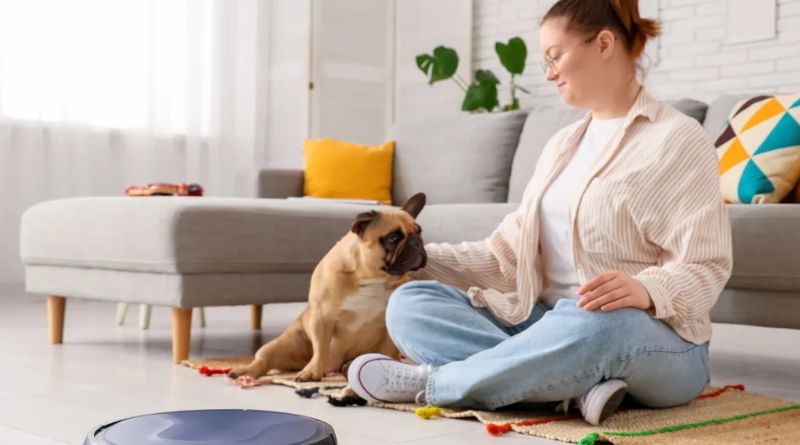
If you’ve ever pulled a solid rope of dog hair out of a robot vacuum’s brush roll, you already know that not every “pet hair” robot vacuum lives up to the label. Marketing copy loves the phrase, but plenty of models still tangle, lose suction on carpet, or need daily maintenance to keep working. This guide focuses on what independent testing labs and pet owners actually report, so you can pick a model that holds up once the fur starts flying, not just one with a good product photo.
What Actually Matters in a Robot Vacuum for Pet Hair
Before comparing specific models, it helps to know what separates a genuinely pet-friendly robot vacuum from one that just claims to be.
Suction alone isn’t the whole story. Independent testers generally agree that 10,000 Pa or more is sufficient for hard floors, while medium-to-deep pile carpet benefits from higher suction paired with carpet-detection technology that boosts power automatically when the robot senses a rug. A vacuum with a huge suction number but no carpet-boost feature can still struggle with embedded fur.
Anti-tangle brush design matters more than most people expect. This is consistently the single biggest complaint from pet owners across reviewer testing and online forums — a vacuum with strong suction but a standard bristle brush will tangle constantly, turning “automated cleaning” into a weekly untangling chore. Rubber or hybrid rubber-bristle rollers designed specifically to resist hair wrapping make a real difference here.
Self-emptying docks are close to essential for heavier shedders. Without one, pet owners often need to empty the bin daily, sometimes more than once a day during seasonal shedding. A self-empty base with a large bag can stretch that to once every few weeks.
Navigation quality affects real-world coverage. LiDAR-based mapping tends to outperform camera-only or bump-sensor navigation for consistently covering every room, which matters because missed spots are exactly where hair and dander accumulate.
Top Picks Based on Independent Testing
It’s worth being upfront: different testing labs land on different “best overall” picks, largely because they weigh suction, price, and maintenance differently. Rather than pretending there’s one universal winner, here’s how the leading options compare based on where they consistently score well.
Best Overall for Most Pet Owners: Shark AI Ultra
In hands-on testing by Forbes Vetted, the Shark AI Ultra stood out for combining strong, consistent suction across floor types with a self-cleaning brush roll and reliable LiDAR navigation. It’s a strong all-rounder if you want solid pet hair performance without stepping all the way up to flagship pricing.
Best for Homes With Both Vacuuming and Mopping Needs: Roborock Saros 10R
If you want a single robot to handle both hair pickup and floor mopping, the Roborock Saros 10R has consistently tested well for its dual-spinning mop pads and zero-tangle brush design, making it a strong pick for mixed hard-floor and carpet homes where pet messes go beyond just hair.
Best Premium, Hands-Off Option: Roborock Saros Z70
For pet owners who want minimal daily involvement, RTINGS’ testing found the Saros Z70 to be a standout flagship performer, particularly on hard floors, with advanced obstacle handling that reduces the odds of the robot getting stuck in pet toys or cords. It’s a premium price point, but it’s built for people who genuinely want to set it and forget it.
Best for Carpet-Heavy Homes: Narwal Freo Z Ultra or Dreame L60 Ultra PE
Testing from Vacuum Wars found the Dreame L60 Ultra PE to be a particularly strong performer specifically on carpet-embedded pet hair, with zero tangles recorded during hair-pickup testing. If most of your home is carpeted rather than hard flooring, prioritizing a model tested specifically for carpet performance, rather than one optimized mainly for hard floors, will make a bigger practical difference than chasing the highest suction number alone.
Best Budget Option: Eufy C10
Consumer Reports found the Eufy C10 to be one of the more affordable robot vacuums that still performs well on pet hair pickup without significant tangling issues, and it includes an automatic emptying station even at its lower price point — a feature that’s often reserved for pricier models.
Best for Obstacle-Heavy Homes (Toys, Cords, Pet Waste): iRobot Roomba j7+
For homes where dog toys, cords, and occasional pet accidents are a real concern, the Roomba j7+ has a longstanding reputation for strong obstacle detection and avoidance. iRobot backs this specific concern with a guarantee replacing the vacuum for free within a year if it does encounter pet waste, which is a fairly unique confidence signal among robot vacuum brands.
How Much Suction Do You Actually Need for Pet Hair?
For hard floors, around 10,000 Pa is generally sufficient to lift pet hair without leaving stray strands behind. For carpets, especially medium or deep pile, you’ll want higher suction, often in the 18,000 to 25,000+ Pa range, ideally paired with carpet-detection technology that automatically increases power when the robot senses it’s moved from hard flooring onto a rug.
Common Mistakes Pet Owners Make When Choosing a Robot Vacuum
Chasing the highest suction number without checking brush design. A vacuum with massive suction but a standard bristle roller will still tangle constantly with long pet hair, undermining the benefit of that extra power.
Skipping the self-empty dock to save money. This is one of the most common regrets reported by pet owners upgrading from a basic model — without it, you’re often emptying the bin daily during shedding season, which defeats much of the “automated” appeal.
Assuming one robot vacuum replaces deep cleaning entirely. Robot vacuums are genuinely effective for daily maintenance, but heavily soiled carpets or deep-set fur may still need an occasional manual vacuum pass or professional cleaning, especially in high-traffic areas.
Ignoring filtration for allergy-prone households. If pet dander is a concern beyond just visible hair, look specifically for models with HEPA-grade filtration, since not every “pet hair” marketed vacuum includes this.
Frequently Asked Questions
What’s the best robot vacuum for heavy shedding dogs? Models with high suction (18,000 Pa or more), carpet-boost technology, and a self-emptying dock tend to handle heavy shedding best, since they reduce how often you need to intervene manually. The Dreame L60 Ultra PE and Roborock Saros Z70 have both tested particularly well for heavy pet hair volume.
Do robot vacuums actually work on pet hair, or is it just marketing? The best ones genuinely work well, but performance varies significantly between models. Independent lab testing shows some robot vacuums pick up nearly all embedded pet hair without tangling, while budget models without anti-tangle brush design can struggle significantly, especially on carpet.
Is a self-emptying robot vacuum worth it for pet owners? For most pet owners, yes. Without a self-empty dock, heavy shedders often require the bin to be emptied daily or even multiple times a day during seasonal shedding. A self-empty base typically extends that to once every few weeks.
How often do I need to clean the brush roll on a pet-hair robot vacuum? Even with a good anti-tangle brush design, most pet owners still need to clear hair off the roller every one to two weeks. Standard bristle brushes without anti-tangle features often need attention far more frequently, sometimes daily.
Do I need a robot vacuum with mopping for pet hair specifically? Not for hair pickup alone — a vacuum-only model handles pet hair fine. A vacuum-and-mop combo becomes more useful if you’re also dealing with muddy paw prints, water bowl spills, or occasional pet accidents on hard floors.
Key Takeaways
The right robot vacuum for pet hair comes down to matching the machine to your specific home: strong anti-tangle brushes and solid suction for daily hair pickup, a self-emptying dock if you have heavy shedders, and carpet-specific performance if most of your flooring isn’t hard surface. No single model is universally “the best” across every review outlet, but options like the Shark AI Ultra, Roborock Saros lineup, and Dreame L60 Ultra PE consistently perform well across independent testing for the features that matter most to pet owners.
If you’re still narrowing things down, it’s worth thinking through your specific floor mix and shedding level first, then matching that to a model tested well in that exact category, rather than defaulting to whichever option has the flashiest spec sheet.